



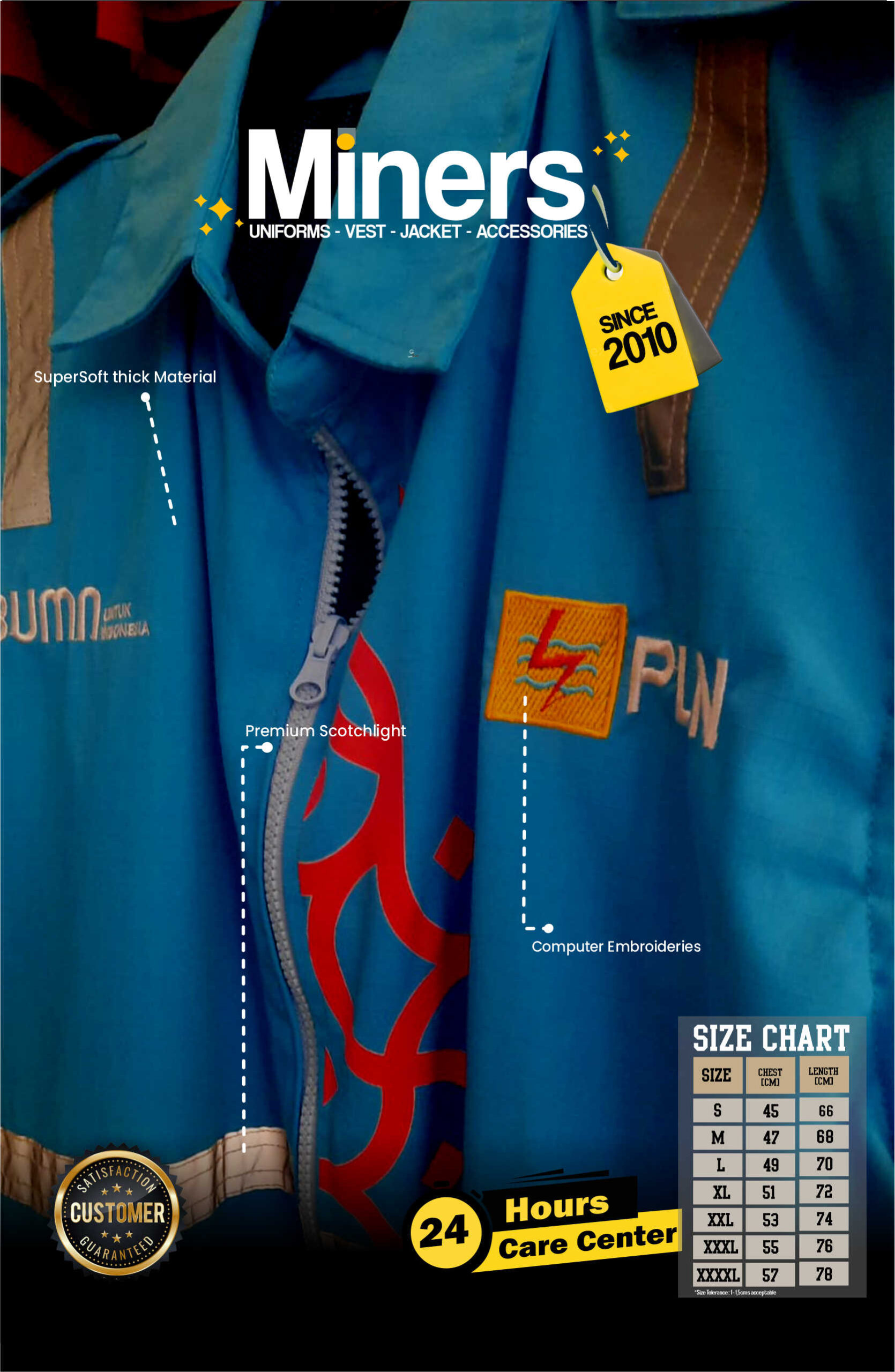
Is Your Mining Workwear Really Protective or Harming?
(Important Notes for Mining Leaders & HSE Managers)
As management, we all know that the cost of employee turnover and downtime due to work-related incidents far outweighs the investment in proper PPE. Unfortunately, the PPE most often subject to budget cuts or undervalued quality is work uniforms, also known as workwear. However, in the site environment—with extreme weather, friction from hard materials, and high risks—workwear can’t be simply a matter of “looking neat and being cheap.”
If you are preparing to oversee the procurement of new uniforms, please ensure these 3 technical aspects do not escape QC :
– Material Durability : Don’t just choose thick/thin fabrics that are hot. Materials such as Premium Japan Drill or Cotton twill have strong fiber density. This is very important so that the clothes don’t tear easily when the mechanical crew or operator maneuvers near heavy equipment.
– Air Circulation (Breathability) : Working under the hot pit sun is a risk of heat stroke. Thick fabric must be tricked with a hidden ventilation system, for example, installing airflow nets on the back or armpit area. Safety clothing must be safe, but don’t make people “roast”.
– Reflector Quality (Scotchlite) : Reflective tape is not just a decoration to keep people busy. In low-light mining areas or during night shifts, the spectrum reflection from international standard reflectors is a thin line between safety and disaster. Note to Directors & Managers : Comfortable uniforms automatically boost work productivity. Conversely, safe uniforms are how we protect our most valuable asset: the lives of our workers.
Before approving your next uniform vendor’s budget, make sure they understand these technical details. Don’t be fooled by a low price. What are the standard wearpack specifications at the site where you currently work? Let’s share in the comments.
CV. Indopitstop Mandiri Pratama
Mobile: +62 821 4149 8808
Email: care@indopitstop.co.id
Web: www.indopitstop.co.id
